Summary
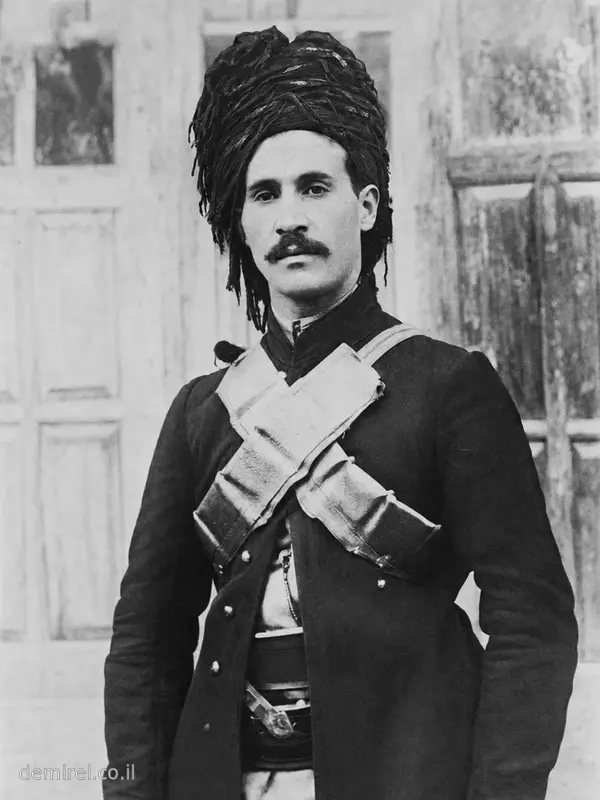
Ismail Agha Shikak, better known as Simko, was an influential Kurdish leader active in northwestern Iran in the early twentieth century. He led parts of the Shikak tribal confederation and became one of the dominant figures west of Lake Urmia during the First World War and its aftermath. At the height of his power, he controlled a wide area, directly or through allied chieftains, and posed a serious challenge to Iran’s central government.
Simko was probably born in 1887 into the ruling family of the Awdoyi branch of the Shikak, whose center was the fortress of Chahriq in the Salmas region. He was killed in an ambush by Iranian forces in 1930. His legacy remains deeply contested: some regard him as an early leader of the Kurdish national movement in Iran, while others emphasize the tribal basis of his authority, the raids and pillage carried out by his forces, and his responsibility for severe violence against civilian populations.
His name appears in sources in several forms, including Ismail Agha Simko, Ismail Agha Shikak, Simqo, Simitqu, and Simkoyê Şikak.
Origins and Rise to Leadership
The Shikak confederation was based in the mountainous country west of Lake Urmia, close to the frontier between Iran and the Ottoman Empire. The border was porous, and local tribes moved across it while maintaining shifting relations with Iranian, Ottoman, and Russian authorities. The weakness of government in the frontier districts allowed tribal leaders to accumulate power through alliances, taxation, raiding, and armed retinues.
Simko’s elder brother, Jafar Agha, was a prominent Shikak leader. In the early twentieth century he was invited to Tabriz by Qajar officials and killed there. Simko’s position strengthened after his brother’s death. During the Iranian Constitutional Revolution he fought against constitutionalist forces around Khoy and was later appointed deputy governor of the Qotur district. Alongside his official connections, he continued to build an independent power base and cultivate relations with Ottoman, Russian, and Kurdish actors.
Even before the First World War, Simko was in contact with Kurdish nationalists, including Abd al-Razzaq Bedirkhan and Sayyid Taha Nahri. These connections exposed him to ideas of Kurdish autonomy or independence, although it is difficult to determine how fully such ideas governed all his actions. His politics combined Kurdish aspirations with the practical need to maintain his standing as a tribal chief.
The First World War and the Killing of Mar Benyamin Shimun
During the First World War, northwestern Iran and the frontier districts repeatedly changed hands. Russian and Ottoman armies operated in the region, the authority of the Iranian government weakened, and relations among Kurds, Azerbaijanis, Assyrians, and Armenians deteriorated. After their displacement from Hakkari, many Assyrians arrived in the Urmia and Salmas districts, including armed forces led by Mar Benyamin Shimun, the patriarch of the Church of the East.
The withdrawal of the Russian army after the 1917 Revolution left a political vacuum and large quantities of weapons. Both Simko’s men and the Assyrian forces grew stronger, and competition developed over security, territory, and influence. In March 1918, Simko invited Mar Benyamin Shimun to a meeting ostensibly intended to discuss a possible alliance. At the end of the meeting, the patriarch and many members of his escort were killed by Simko and his men.
The killing triggered another wave of reprisals and massacres. Assyrian forces attacked Muslim populations and Kurdish villages; Ottoman troops and Kurdish groups later took part in the pursuit and killing of Assyrians and Armenians. Communities that were not parties to the conflict, including the Jewish community of Kuhna Shahr, also suffered severely. The killing of Mar Shimun remains one of the acts most closely associated with Simko and occupies a central place in Assyrian historical memory.
The Revolt and Regional Rule
After the war, Simko became the leading military power in large parts of western Iranian Azerbaijan. In 1919 he took part in a gathering of Kurdish leaders at which open rebellion and the establishment of an independent Kurdish entity were discussed. He and Sayyid Taha sought British support but received no firm commitment.
Between 1920 and 1922, Simko extended his control over the plains of Urmia and Salmas and parts of the Khoy district. He appointed governors, repeatedly defeated Iranian forces, and drew additional tribes into his movement. In 1921 his forces captured Souj Bulagh, today Mahabad, which became an important center of his rule. At its greatest extent, his influence reached southward to the areas of Baneh, Sardasht, and Saqqez.
His movement also displayed Kurdish national characteristics. A Kurdish–Persian newspaper titled Kurd was published under his rule, and Kurdish was used in parts of his administration. Some studies also credit Simko and his associates with supporting Kurdish-language schools. Nevertheless, his rule never developed into a stable institutional state. It depended primarily on his personal authority, alliances among tribal leaders, and a military force whose size rose and fell with his battlefield fortunes.
Simko and his followers described their extraction of resources from the population as taxation, whereas many residents and Iranian sources regarded it as pillage and extortion. Kurdish towns and villages were also affected by raids carried out by his forces. Scholars therefore note that, alongside nationalist motives, many of the fighters and tribes that joined him were driven by tribal loyalty, the prospect of booty, and his military successes.
Defeat and Death
The rise of Reza Khan, later Reza Shah Pahlavi, led to the construction of a more organized and disciplined Iranian army. In August 1922, the army launched a coordinated campaign against Simko. His forces were defeated, many allies abandoned him, and he fled first to Turkey and then to Iraq. Even in exile he continued to contact tribal leaders and seek support for a return to Iran.
Simko was permitted to return to Iran in 1924. Two years later he attempted to rebuild his power in the Salmas region, but the effort failed and he again escaped to Iraq. Near the end of the decade, the Iranian government invited him back and offered him an official position in the Oshnavieh district. Soon after his arrival, he was caught in a planned ambush and killed in 1930.
The manner of his death resembled methods previously used by Qajar authorities against members of his family: an invitation to negotiations or official service followed by a planned killing. His death ended his final attempt to restore his political and military position in northwestern Iran.
Historical Memory and Assessment
Assessments of Simko are strongly shaped by the identity and perspective of the writer. Iranian state historiography has often portrayed him as a brigand and a tribal chief who rebelled against the country. Kurdish nationalist writing sometimes presents him as a leader who fought for Kurdish independence and anticipated the organized Kurdish movements of the mid-twentieth century. In Assyrian memory, his name is associated above all with the killing of Mar Benyamin Shimun and the violence that followed.
Contemporary scholarship offers a more complex picture. Simko did employ Kurdish national language and ideas, support Kurdish publishing, and pursue a measure of self-rule. At the same time, his power rested on tribal organization, temporary alliances, and violence against rivals and civilian communities. He can therefore be understood simultaneously as a tribal chief, a regional ruler, and an early figure in Kurdish nationalist politics in Iran—without overlooking the grave acts committed by him or in his name.
Simko in Sinior’s Diary
In Sinior’s diary, Simko is not a distant historical figure. His power and the conduct of his men directly affect the Demirel family and the Jewish community of the Salmas region.
In Chapter One, Simko is portrayed as a local Kurdish leader struggling with rivals and members of his own family for control of the area. According to Sinior’s recollections, Simko’s fighters lodged in Jewish homes during the conflict and compelled families to provide food, accommodation, and fodder for their horses. The diary also recounts the arrival of Mar Benyamin Shimun in Kuhna Shahr and the meeting at which Simko and his men shot the patriarch and his entourage. Sinior, then a child, recalls watching the procession on its way to the meeting and his family barricading themselves inside their home when the gunfire began. The reprisals that followed brought killing, pillage, and destruction and turned members of the Jewish community into refugees and captives.
Chapter Three describes Simko’s renewed strength after the departure of the Christian forces. His men returned to the area and took property and livestock from Jewish homes while the population was suffering a severe food shortage. Sinior later describes an Iranian force that assembled at Qara Qishlaq to fight Simko but was rapidly defeated. He also records an Iranian attempt to kill Simko with an explosive device hidden in a gift box. According to the diary, the explosion killed Simko’s brother and several others. Sinior states that he later witnessed the execution of men who had been handed over to Simko as responsible for the plot.
Chapter Four preserves a tradition concerning Simko’s exile in Iraq, a British attempt to bring him to a meeting, and his flight toward the Turkish frontier. It then describes his return to Iran, the regrouping of tribes around him, and his death in an ambush prepared by Iranian forces. Some details—including the alleged British arrest attempt, the number of Simko’s followers, and the number killed in the final ambush—do not fully correspond with the standard scholarly account. They should therefore be read as testimony or tradition conveyed to Sinior rather than as an official chronicle.
Sinior interprets Simko’s death as retribution for the killing of Mar Shimun and the suffering that followed. For him, Simko embodies the insecurity in which the region’s small communities lived: caught among tribal forces, foreign armies, and a weak Iranian government, without the power to influence the events that determined their fate.
Names and spelling variants
Ismail Agha Shikak (Simko); Ismail Agha Shikak; Simko Shikak; Simko
Mentioned in the book
Chapter One – Salmas; segment 01.04 – The Assyrians and the Kurdish Fraternal Conflict; segment 01.07 – The Death of Mar Shimun; Chapter Three – Wanderings; segment 03.01 – The Return to Kuhna Shahr; Chapter Three – Wanderings; segment 03.03 – Dilman; Chapter Four – Bashhalan; segment 04.01 – Bashhalan; segment 04.02 – The End of Simko